

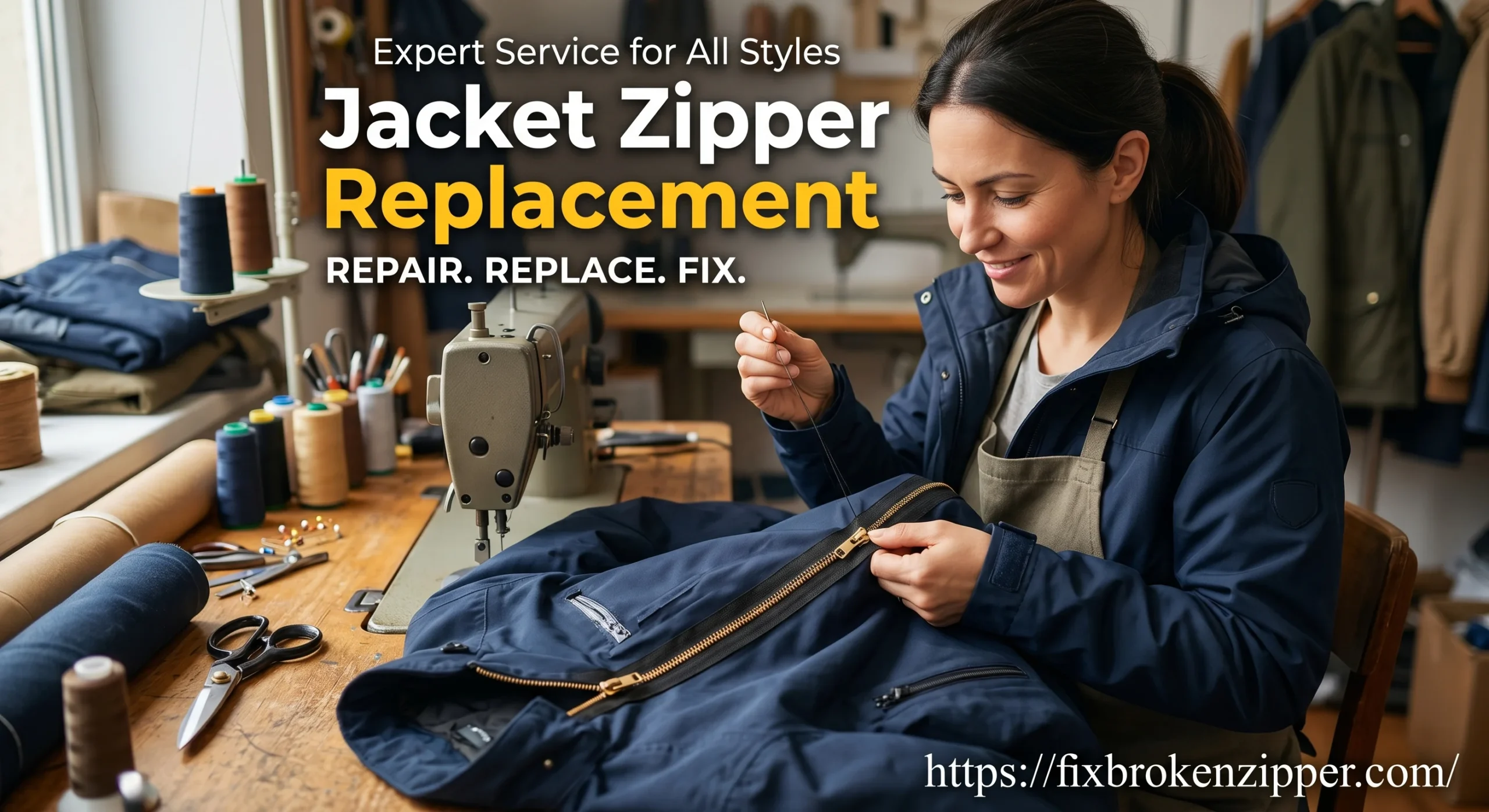
A broken jacket zipper can be very annoying, especially during winter or rainy days. Sometimes the zipper sticks. The teeth may separate, or the slider might not work right. The good news is that you do not always need to throw away your favorite jacket. With the right tools and simple steps, you can fix or replace the zipper at home.
This complete guide on Jacket Zipper Replacement will help beginners understand why jacket zippers fail, how to repair small issues, and when a full zipper replacement is needed. You will also learn useful tips to keep your zipper working smoothly for a long time.
Why Jacket Zippers Get Damaged
Before starting a jacket zipper replacement, it is important to know the common causes of zipper damage.
Worn-Out Slider
The slider is the part you pull up and down. Over time, it becomes loose and cannot hold the zipper teeth together properly.
Broken Zipper Teeth
Teeth may bend, break, or go missing after regular use. This makes the zipper uneven or impossible to close.
Fabric Stuck in the Zipper
Jacket fabric often gets trapped inside the zipper, causing jams and damage.
Rust or Dirt
Old zippers collect dirt, dust, and moisture. Metal zippers may rust and stop moving smoothly.
Excessive Force
Pulling the zipper too hard can damage the slider, teeth, or zipper stops.
Signs You Need Jacket Zipper Replacement
Sometimes a simple repair works, but other times the entire zipper must be replaced.
Here are common signs that show you need a full zipper replacement:
- The zipper teeth are missing
- The zipper separates after closing
- The slider keeps falling off
- The zipper tape is torn
- The zipper is bent or rusted badly
- Repairs no longer work
If your zipper has multiple problems, replacing it is usually the best option.
Tools Needed for Jacket Zipper Replacement
Before you begin, gather these tools and materials.
Basic Tools
- Needle
- Thread
- Scissors
- Pliers
- Seam ripper
- Pins or clips
- Measuring tape
Replacement Materials
- New jacket zipper
- Matching thread
- Fabric glue (optional)
Using the correct zipper size is very important. Measure the old zipper carefully before buying a new one.
How to Choose the Right Replacement Zipper
Choosing the right zipper makes the repair much easier.
Match the Length
Measure the old zipper from top to bottom. Buy the same length.
Choose the Correct Type
There are different zipper types:
- Plastic zippers
- Metal zippers
- Heavy-duty jacket zippers
- Waterproof zippers
Choose one similar to the original zipper.
Pick the Right Color
Matching the zipper color helps your jacket look neat and professional.
Step-by-Step Jacket Zipper Replacement Guide
Now let’s begin the actual replacement process.
Step 1: Remove the Old Zipper
Use a seam ripper carefully to remove the stitches holding the old zipper.
Work slowly to avoid damaging the jacket fabric.
After removing the stitches:
- Pull out the zipper gently
- Remove leftover threads
- Clean the zipper area
This step may take some time, but patience helps avoid mistakes.
Step 2: Prepare the New Zipper
Place the new zipper next to the jacket opening.
Check:
- Length matches properly
- Teeth align evenly
- Zipper opens and closes smoothly
Pin the zipper in place before sewing.
Step 3: Attach the New Zipper
You can sew by hand or use a sewing machine.
Hand Sewing Method
- Thread the needle
- Start sewing from the top
- Use small, tight stitches
- Follow the original stitch line
Sewing Machine Method
- Use a zipper foot
- Sew slowly along both sides
- Keep the fabric flat
Make sure the zipper remains straight during sewing.
Step 4: Test the Zipper
After sewing:
- Open and close the zipper several times
- Check for smooth movement
- Make sure the teeth align correctly
If the zipper sticks, adjust the stitching slightly.
Step 5: Finish the Edges
Trim extra threads and inspect the repair.
You can add a few extra stitches at the top and bottom for strength.
Your jacket zipper replacement is now complete.
Quick Fixes Before Full Replacement
Sometimes you can repair the zipper without replacing the whole thing.
Fix a Stuck Zipper
Rub these items on the zipper teeth:
- Candle wax
- Soap
- Pencil graphite
- Lip balm
This helps the zipper move smoothly.
Tighten a Loose Slider
Use pliers gently to squeeze the slider sides slightly.
Do not apply too much pressure or the slider may break.
Replace the Zipper Pull
If only the pull tab breaks:
- Attach a keyring
- Use a paper clip temporarily
- Install a replacement pull tab
This quick fix can extend zipper life.
Reattach a Separated Zipper
Sometimes the zipper separates because of a loose slider.
Try:
- Moving the slider to the bottom
- Tightening it with pliers
- Re-zipping carefully
If it still separates, replacement may be necessary.
Common Mistakes During Jacket Zipper Replacement
Avoid these common beginner mistakes.
Using the Wrong Zipper Size
A zipper that is too long or too short will not work properly.
Always measure carefully.
Sewing Crooked Lines
Uneven stitching can cause the zipper to jam.
Pin the zipper first to keep it straight.
Pulling the Fabric Too Hard
Stretching the fabric while sewing may cause wrinkles and poor alignment.
Ignoring Small Damage
Small zipper issues become bigger over time.
Fix problems early before full replacement becomes necessary.
Can You Replace a Jacket Zipper Without Sewing?
Yes, temporary no-sew methods are available.
You can use:
- Fabric glue
- Iron-on adhesive tape
- Clip-on zipper repair kits
However, these methods usually do not last long. Sewing provides a stronger and more durable repair.
When to Repair Instead of Replace
You may only need a repair if:
- The slider is loose
- The zipper pull is missing
- The zipper is stuck
- The teeth are slightly bent
Small repairs save time and money.
When Full Jacket Zipper Replacement Is Best
Replacement is the better option if:
- Teeth are missing
- Zipper tape is torn
- Multiple repairs failed
- The zipper keeps separating
- The zipper is rusted badly
A new zipper can make your jacket feel almost brand new again.
Tips to Avoid Zipper Damage
Taking care of your zipper helps it last longer.
Keep It Clean
Remove dirt and dust regularly.
Use a soft brush if needed.
Zip Carefully
Do not pull aggressively.
Guide the zipper gently while closing.
Avoid Overstuffing Pockets
Heavy pockets create pressure on the zipper.
Lubricate Occasionally
Apply zipper lubricant or wax occasionally for smooth movement.
Store Jackets Properly
Do not fold jackets tightly around the zipper.
Hang them properly to prevent bending.
Benefits of Replacing a Jacket Zipper
Replacing a zipper is often cheaper than buying a new jacket.
Saves Money
A simple zipper replacement costs much less than replacing the entire jacket.
Extends Jacket Life
Your favorite jacket can last for many more years.
Eco-Friendly Choice
Repairing instead of throwing away reduces waste.
Improves Appearance
A new zipper makes the jacket look fresh and clean again.
FAQs
How much does jacket zipper replacement cost?
The cost depends on the zipper type and whether you do it yourself or hire a tailor. DIY replacement is usually cheaper.
Can beginners replace a jacket zipper?
Yes. With patience and simple tools, beginners can replace a jacket zipper at home.
How long does zipper replacement take?
For beginners, it may take 1–2 hours. Experienced people can do it faster.
Is it better to repair or replace a zipper?
Minor issues can be repaired, but severe damage usually requires full replacement.
Can I use any zipper for my jacket?
No. You should choose the correct size, type, and strength for the jacket.
Why does my zipper keep separating?
Usually the slider becomes loose and cannot lock the teeth properly.
Conclusion
A broken zipper does not mean your jacket is ruined. With the right tools and a little patience, jacket zipper replacement can be done easily at home. Fixing a stuck, separated, or broken zipper can save you money and help your jacket last longer.Start with simple fixes first. If the damage is severe, follow the step-by-step replacement guide carefully. Proper zipper care and maintenance will also help prevent future problems.Learn how jacket zippers work and how to fix them. This way, your favorite jackets can last for years.
