

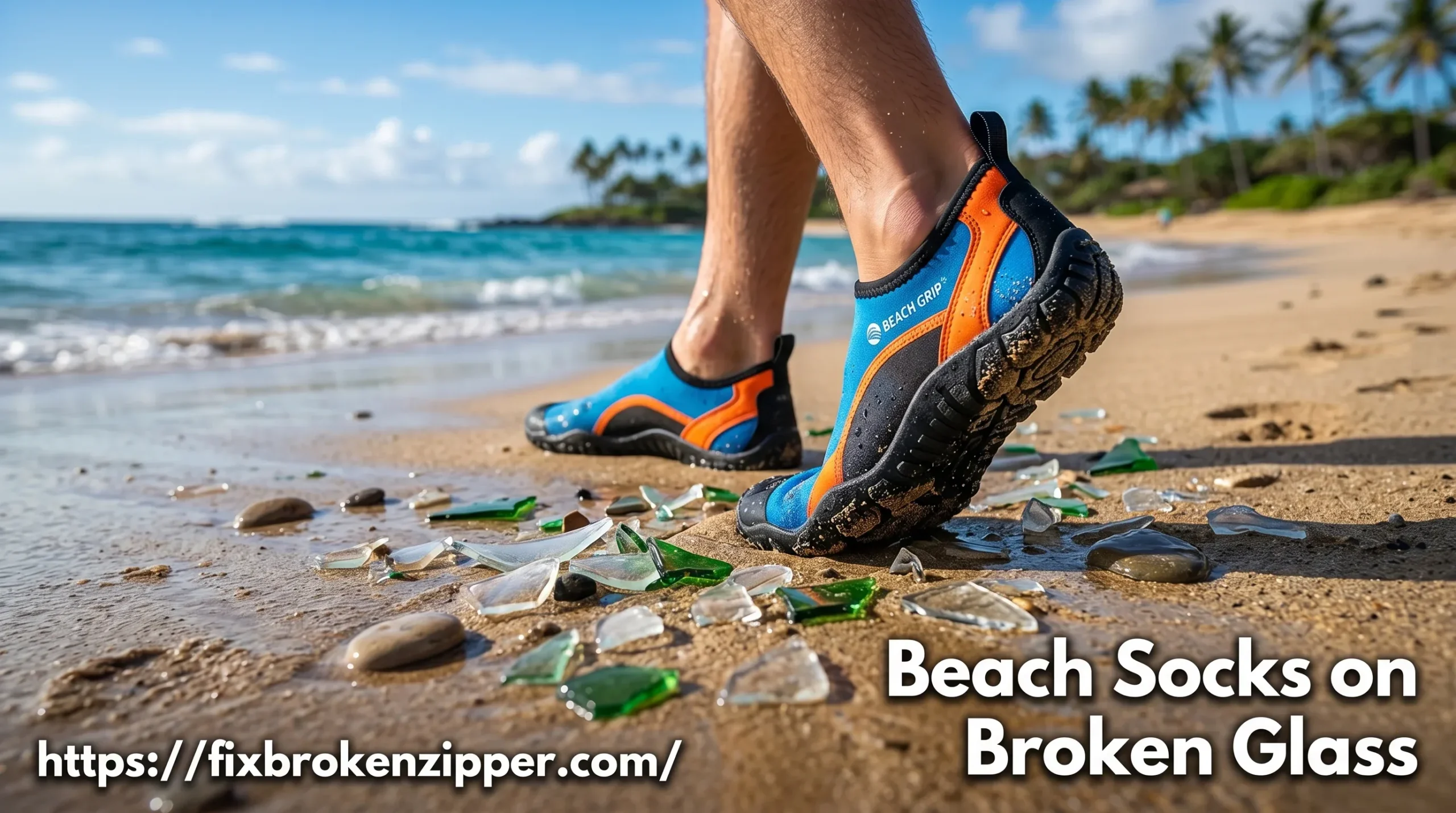
Walking on the beach is fun and relaxing. But broken glass can quickly turn a good day into a painful one. Many beaches, pools, and lakes can hide glass pieces in the sand. Stepping on them can cause cuts, infections, and serious injuries.
This is why many people now use beach socks on broken glass for extra foot protection. Beach socks are lightweight protective socks designed for water, sand, and rough surfaces. They help reduce the risk of cuts while keeping your feet comfortable.
In this guide, you’ll discover how beach socks protect against broken glass. You’ll find the tools you need, quick fixes for damaged socks, safety tips, and when to replace them.
Why Broken Glass on Beaches Is Dangerous
Broken glass on beaches is more common than many people think. Glass bottles, food containers, and trash left by visitors can break. They spread sharp pieces across the sand.
The danger becomes worse because:
- Sand hides sharp glass pieces
- Wet sand makes glass harder to see
- Small glass fragments are almost impossible to see
- Children often run barefoot
- Water can move glass to different areas
Even tiny cuts from glass can become painful if sand or bacteria enter the wound.
What Are Beach Socks?
Beach socks are flexible protective socks made from neoprene or water-resistant fabric. They’re perfect for beach fun, swimming, surfing, volleyball, and walking on rough surfaces.
Unlike normal socks, beach socks
- Drying takes place in a short amount of time
- Resist water damage
- Protect feet from hot sand
- Add grip on slippery surfaces
- Provide a barrier against small, sharp objects
Many people use beach socks in broken glass areas to reduce the chances of injury.
How Beach Socks Help Protect Against Broken Glass
Beach socks can’t block all sharp objects, but they do lower the risk of cuts from small or medium glass pieces.
Here are some important benefits:
Extra Foot Protection
The thick material creates a protective layer between your feet and the ground.
Better Grip
Wet rocks and slippery surfaces become safer when wearing beach socks.
Comfort on Rough Sand
Sharp shells, stones, and rough surfaces feel less painful.
Reduced Risk of Infection
Cuts can expose skin to bacteria in sand and water. Beach socks help lower this risk.
Safer Activities for Kids
Children running near hidden glass can enjoy extra protection.
Common Causes of Broken Glass on Beaches
Understanding the causes helps to prevent future problems.
- Littering
People sometimes leave glass bottles or containers behind.
- Storm Damage
Strong waves can bring broken glass from nearby areas.
- Beach PartiesCrowded gatherings often increase trash and broken items
Poor Cleaning
Some beaches are not cleaned regularly.
Accidental Breakage
Dropping bottles or jars creates dangerous sharp pieces.
Tools Needed for Beach Foot Protection
Using the right tools improves safety and comfort.
Essential Items
- Beach socks
- Water shoes
- Small first aid kit
- Tweezers
- Bandages
- Antiseptic wipes
- Flashlight for evening walks
Optional Safety Gear
- Sand-resistant sandals
- Thick beach mat
- Protective beach bag for glass disposal
Step-by-Step Guide to Using Beach Socks on Broken Glass Areas
Step 1: Inspect the Beach Area
Before walking, check the sand for visible sharp objects or trash.
Step 2: Choose Quality Beach Socks
Pick socks with thick soles and strong stitching. Thin socks provide less protection.
Step 3: Wear the Correct Size
Tight socks may feel uncomfortable, while loose socks can slip off.
Step 4: Test the Surface Carefully
Walk slowly in unfamiliar areas. Avoid jumping or running immediately.
Step 5: Avoid High-Risk Zones
Stay away from trash areas, campsites, or party locations where broken glass is common.
Step 6: Rinse Socks After Use
Saltwater and sand can weaken the material over time.
Quick Fixes for Damaged Beach Socks
Sometimes beach socks become damaged during use. Here are some quick solutions.
- Small Hole Repair
Use waterproof fabric glue or patch kits for minor holes.
- Loose Stitching
Sew the damaged area with strong nylon thread.
- Worn-Out Grip
Add grip pads or replace the socks if slipping becomes dangerous.
- Sand Build-Up
Rinse socks thoroughly with clean water to remove trapped sand.
Signs Your Beach Socks Need Replacement
Even good beach socks wear out over time.
Replace them if you notice:
- Thin soles
- Large holes
- Torn stitching
- Weak grip
- Poor fit
- Bad odor that does not wash away
Using damaged socks on broken glass areas reduces protection.
Best Types of Beach Socks for Safety
Not all beach socks are the same. Some work better for protection.
Neoprene Beach Socks
These are thick, flexible, and water-resistant.
Benefits
- Good insulation
- Better protection
- Comfortable fit
Anti-Slip Beach Socks
These have rubber grip patterns on the bottom.
Benefits
- Better balance
- Reduced slipping
- Safer on wet surfaces
Reinforced Sole Beach Socks
These include stronger sole materials for rough terrain.
Benefits
- Increased durability
- Improved protection from sharp objects
Tips to Avoid Broken Glass Injuries at the Beach
Never Walk Barefoot in Unknown Areas
Always use beach socks or water shoes.
Check the Sand Carefully
Watch where you step, especially near trash bins or rocks.
Keep Children Supervised
Kids often run without noticing hazards.
Avoid Beaches After Large Events
Broken bottles are more common after parties or festivals.
Carry a Small First Aid Kit
Quick treatment reduces infection risk.
Dispose of Glass Properly
Help keep beaches clean and safe for others.
What To Do If You Step on Broken Glass
Even with beach socks, accidents can still happen.
Step 1: Stay Calm
Avoid putting pressure on the injured foot.
Step 2: Clean the Area
Wash the wound with clean water.
Step 3: Remove Visible Glass Carefully
Use sterilized tweezers if needed.
Step 4: Apply Antiseptic
This helps prevent infection.
Step 5: Cover the Wound
Use a clean bandage.
Step 6: Seek Medical Help
Visit a doctor if:
- Bleeding continues
- Glass remains inside
- Pain becomes severe
- Signs of infection appear
Beach Socks vs Water Shoes
Many people wonder which option is better.
| Feature | Beach Socks | Water Shoes |
|---|---|---|
| Comfort | Lightweight | Slightly heavier |
| Flexibility | Very flexible | Less flexible |
| Protection | Moderate | Higher |
| Portability | Easy to pack | Bulkier |
| Sand Resistance | Good | Very good |
For areas with heavy broken glass, water shoes may provide stronger protection. However, beach socks are excellent for light to moderate hazards.
How to Clean Beach Socks Properly
Good cleaning keeps your socks effective and long-lasting.
Rinse Immediately
Wash away saltwater and sand after use.
Use Mild Soap
Strong chemicals can damage the fabric.
Air Dry Completely
Avoid direct high heat.
Store in a Dry Place
Moisture can create bad smells and weaken material.
Benefits of Wearing Beach Socks Beyond Glass Protection
Beach socks offer several extra advantages.
Protection From Hot Sand
Summer sand can become extremely hot.
- Reduced Foot Fatigue
Soft materials improve comfort during long walks.
- Better Hygiene
They help protect feet from bacteria and rough surfaces.
Improved Sports Performance
Useful for beach volleyball, surfing, and paddleboarding.
Environmental Importance of Clean Beaches
Broken glass problems often happen because of pollution. Keeping beaches clean protects both people and wildlife.
You can help by:
- Using trash bins
- Recycling bottles
- Picking up dangerous objects safely
- Encouraging others to keep beaches clean
Small actions make beaches safer for everyone.
FAQs
Can beach socks fully stop glass injuries?
No, but they greatly reduce the risk of cuts from smaller glass pieces.
Are beach socks better than barefoot walking?
Yes, beach socks provide extra protection and comfort.
How long do beach socks last?
Most quality beach socks last several months to years depending on usage.
Can children use beach socks?
Yes, many brands make beach socks designed for kids.
Should I use water shoes instead?
Water shoes provide stronger protection in high-risk areas.
How do I know if glass is under the sand?
Look for warning signs, trash areas, or sparkling reflections in sunlight.
Conclusion
Using beach socks on broken glass areas is a smart and practical way to improve foot safety at the beach. They might not stop every injury, but they do offer good protection. They guard against sharp objects, hot sand, and rough surfaces.To lower the risk of painful cuts, choose good beach socks. Check beach areas closely. Also, replace damaged socks when necessary. Wearing beach socks helps keep everyone safe and makes the beach more fun. Following safety rules is key too.No matter if you love swimming, beach sports, or relaxing walks by the water, keep your feet safe.
