

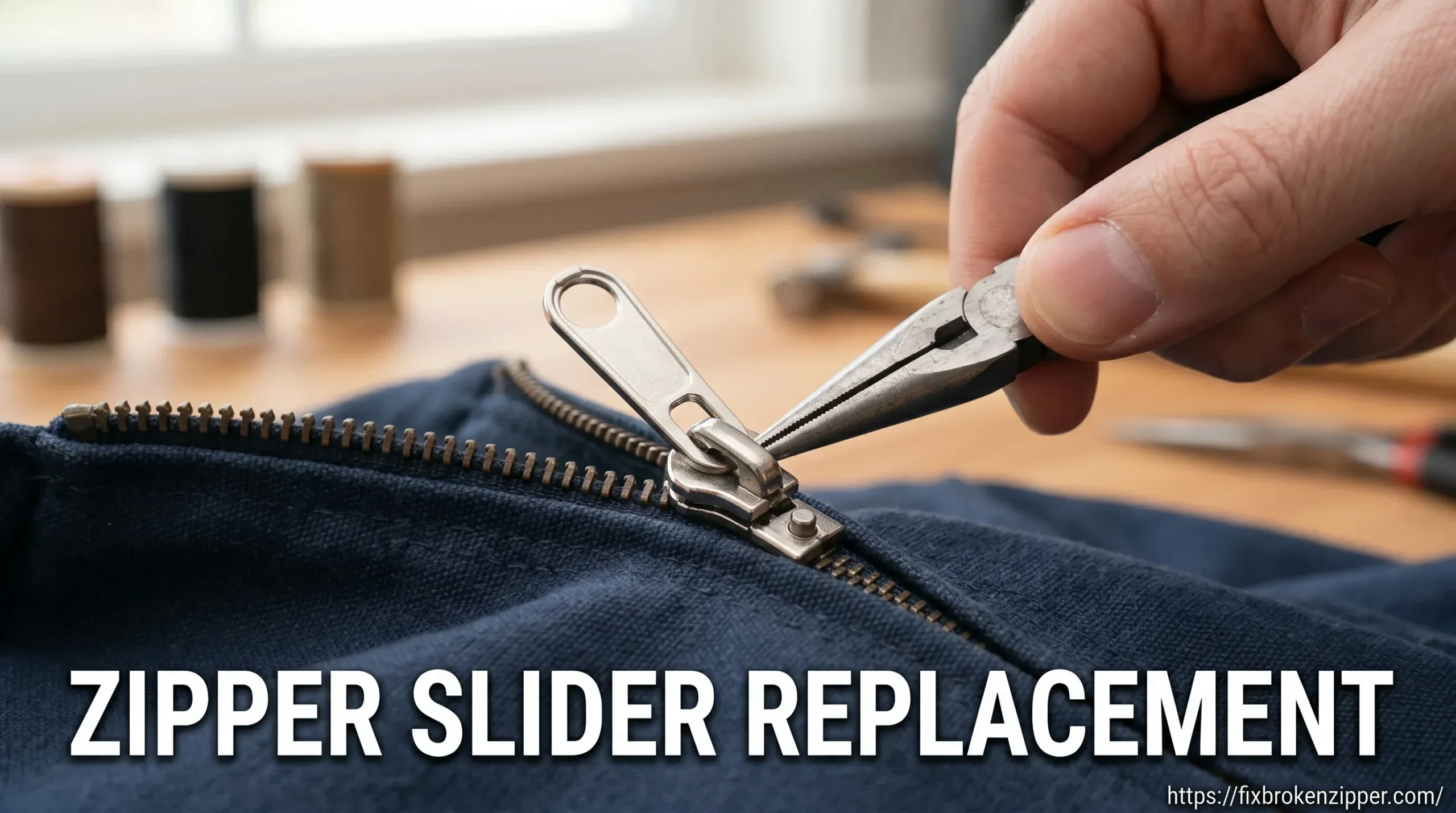
Is your zipper not closing properly? Does it slide up and down but leave the teeth open behind it? You probably need a zipper slider replacement.The slider is the small metal or plastic piece that moves along the zipper. It is the part you grip and pull. Over time, sliders bend, break, or simply stop working. When that happens, your jacket, bag, jeans, or luggage becomes almost useless.The good news is that a zipper slider replacement is one of the easiest zipper repairs you can do at home. You do not need to be good at sewing. You just need the right tools, a few minutes, and this guide.
Let us walk through everything step by step.
What Causes a Zipper Slider to Stop Working?
Before you fix the problem, it helps to know why it happened. Here are the most common causes:
- The slider gets bent or warped.
This is the number one cause. When you force a stuck zipper or pull too hard at an angle, the inside gap of the slider widens. It can no longer grip the zipper teeth tightly enough to close them.
- The slider breaks off completely.
On cheap zippers, the slider body can crack or snap, especially on bags and luggage that are used heavily.
- The pull tab snaps off.
Sometimes the slider body is fine but the tab you hold breaks away. In this case, you may only need to replace the tab, not the full slider.
- Rust and corrosion.
Metal sliders on outdoor gear, coats, and bags can rust. This rust makes them stiff or can even cause them to crumble.
- Wrong size slider.
If someone tried to fix the zipper with the wrong size slider, it won’t close right.
Knowing the cause helps you decide whether you need a quick fix or a full zipper slider replacement.
Tools You Will Need
You do not need specialist equipment. Here is a simple list of what to gather before you start:
- Replacement zipper slider (the correct size — more on this below)
- Needle-nose pliers
- A seam ripper or small scissors
- A sewing needle and thread (to resew the zipper stop after)
- A ruler or measuring tape
- A safety pin (helpful to hold things in place)
You can buy replacement sliders online or at a haberdashery or craft shop. They are very affordable — usually less than £2 each. Just make sure you get the right size.
How to Find the Right Slider Size
This is the step most beginners skip — and it causes problems.
Zipper sliders come in sizes like #3, #5, #8, and #10. The larger the number, the bigger the zipper. Look on your old slider for a number stamped into the metal. If you cannot find it, measure the width of the zipper teeth in millimetres:
- 3mm = size #3
- 5mm = size #5
- 8mm = size #8
Check the type: coil zippers (with nylon spiral teeth) and metal zippers use different sliders. Buy the matching type.
Step-by-Step Guide to Zipper Slider Replacement
Follow these steps carefully and your zipper will be working again in under 15 minutes.
Step 1: Remove the Zipper Stop
At the top of the zipper (where the slider cannot go past), there is a small metal clamp called the top stop. Use your needle-nose pliers to gently bend it open and slide it off. Be careful not to damage the zipper tape (the fabric strip the teeth are attached to).
Step 2: Slide Off the Old Slider
Once the top stop is removed, slide the old slider off the top of the zipper teeth. If the slider is stuck in the middle, use pliers to gently break it away from the teeth. Be careful not to pull the teeth out of alignment.
Step 3 :Check the Zipper Teeth
Before fitting the new slider, look at the teeth. Are any bent, missing, or out of line? If so, try to straighten them gently with your pliers. If several teeth are damaged, the zipper may need a full replacement instead.
Step 4: Thread the New Slider
Hold the new slider with the large opening facing down. Carefully feed both rows of zipper teeth into the two channels at the bottom of the slider. Push the slider up slowly, making sure both sides feed in evenly. It should begin to mesh the teeth together as it moves up.
Step 5 :Reattach the Top Stop
Once the slider is in place, slide the old top stop back on or use a new one. Clamp it down firmly with your pliers so the slider cannot come off the top again. If you do not have a top stop, you can sew a few tight stitches across the top of the zipper tape instead — this works just as well.
Step 6: Test the Zipper
Move the slider up and down several times. It should glide smoothly and the teeth should close cleanly behind it. If the teeth still gap open, the slider may be slightly too wide inside. Use your pliers to gently squeeze the sides of the slider together just a little — this narrows the gap and helps it grip the teeth properly.
That is your zipper slider replacement done.
Quick Fixes When You Cannot Replace the Slider Right Away
Sometimes you need a fast solution while you wait for a replacement part. Try these:
- Squeeze the slider with pliers
If the slider has just widened slightly, a gentle squeeze with pliers can tighten it back up and make it work again temporarily.
- Use a safety pin
If the slider body is broken but the teeth are fine, a safety pin through the teeth can hold the zipper shut until you get a proper fix.
- Zip it up and leave it
For bags and luggage, zipping to the top and leaving it closed can hold things shut even with a worn slider.
These are temporary solutions. A proper zipper slider replacement is always the better long-term fix.
When Should You Replace the Whole Zipper?
A zipper slider replacement solves most problems. But sometimes the entire zipper needs to go. Consider a full replacement if:
- Multiple zipper teeth are missing or broken
- The zipper tape is torn or fraying badly
- The zipper separates at the bottom (the bottom stop is gone)
- You have replaced the slider more than once and it keeps failing
In these cases, take the item to a tailor or cobbler. A full zipper replacement usually costs between £5 and £20 depending on the item and zipper size. It is well worth it for a quality jacket or bag.
Tips to Prevent Zipper Slider Problems
Once your zipper is working again, keep it that way with these simple habits:
- Do not force a stuck zipper.
If it resists, stop and find the cause. Fabric caught in the teeth is the most common culprit.
- Lubricate your zippers regularly.
Rub a little candle wax, bar soap, or beeswax along the teeth. This keeps the slider moving smoothly and reduces wear.
- Avoid overloading bags.
Too much pressure on the zipper causes the slider to widen and fail faster.
- Close zippers before washing.
Open zippers in the washing machine can catch on other items and bend the slider or teeth.
- Store items with zippers closed.
This keeps the slider in place and reduces stress on the teeth.
FAQs
Can I replace a zipper slider without removing it?
No, you usually need to remove the top stop. If broken, snap it off and add a new slider.
How do I choose the right slider size?
Check the number on the slider or measure teeth width (e.g., 5mm = #5).
How long does it take to replace a slider?
Around 10–15 minutes with the right tools.
Is fixing a zipper worth it?
Yes, it’s cheap, quick, and better than buying new.
Can I fix a zipper on leather items?
Yes, just be careful not to damage the leather.
Conclusion
A broken zipper does not have to mean a ruined item. As you have seen, a zipper slider replacement is a quick, affordable fix that anyone can do at home. You can fix your jacket, bag, or jeans easily. Just grab the right size slider, some pliers, and give it a few minutes of your time.For urgent situations, a quick squeeze of the slider with pliers can buy you time. For a lasting fix, a proper replacement slider is the answer. And when the whole zipper is beyond repair, a tailor can sort it out at low cost.
